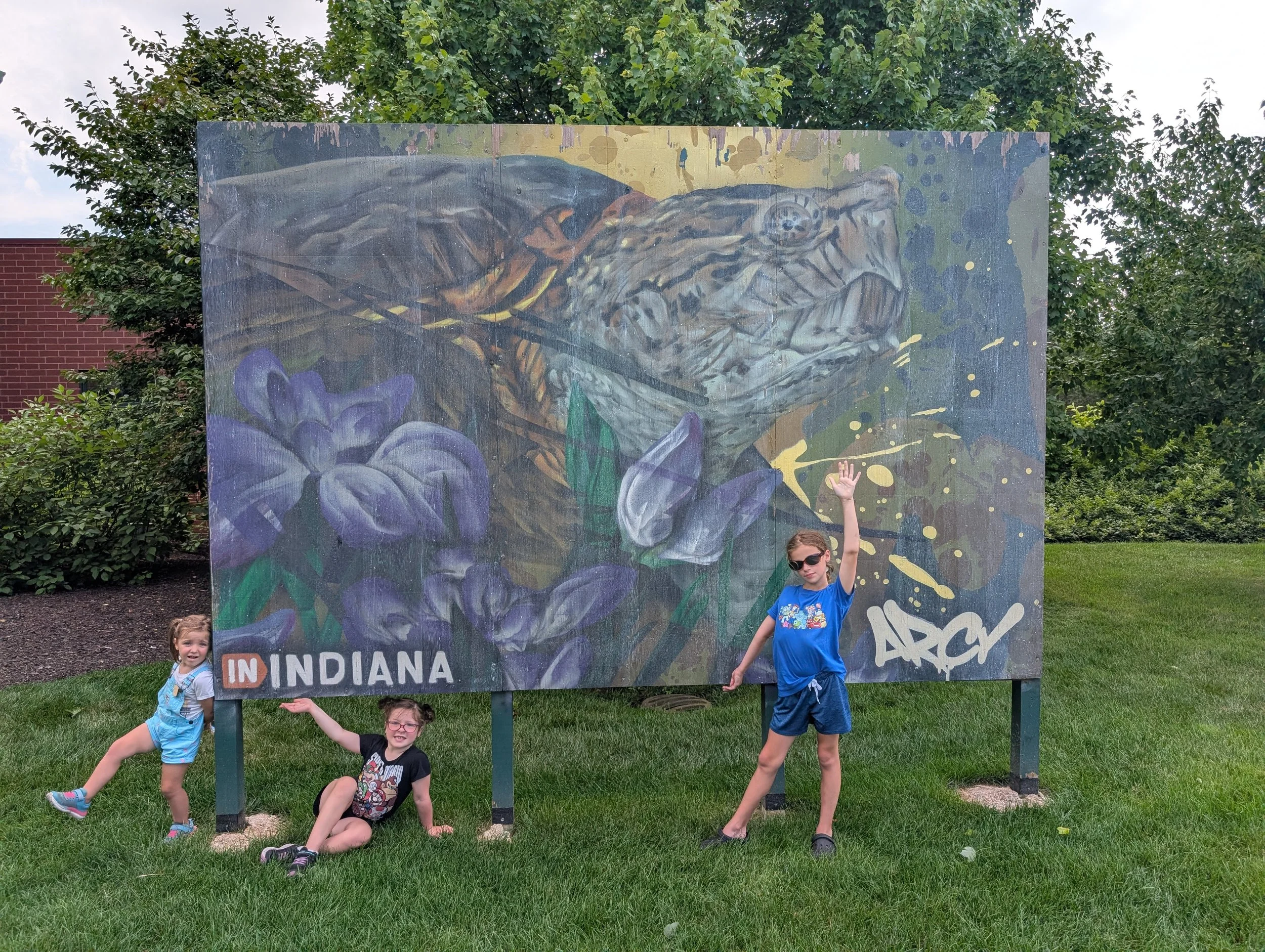
Indiana Dunes: A National Park in Our Backyard
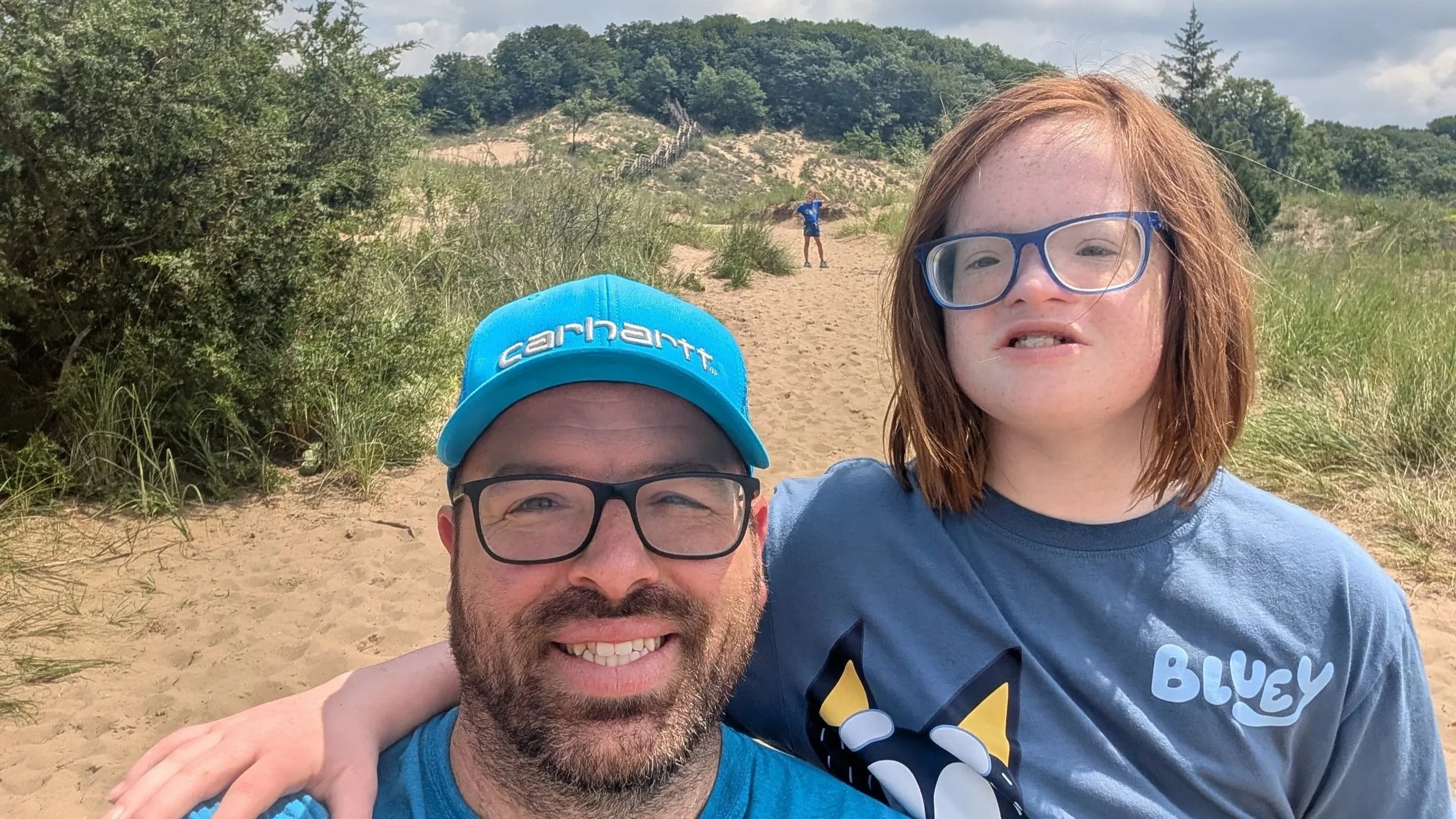
When people think about beach destinations, they probably don’t think of the Midwest. Our family thinks Lake Michigan. We've spent countless days at Warren Dunes State Park in Michigan, enjoying the sandy beaches and climbing the dunes. Despite living less than an hour from Indiana Dunes National Park, though, we had never made a dedicated trip with the kids to Indiana Dunes.
Indiana Dunes is one of the most visited national parks in the country, drawing massive crowds from Chicago all summer long. So on July 27th, 2025 we finally went. All six of us. On what turned out to be a scorching summer day.
Before we get into the day, it's worth saying: Indiana Dunes is not just a beach. Most people picture Lake Michigan shoreline and leave it at that. What's actually inside this park is a surprisingly diverse collection of ecosystems packed into a relatively small area. Beaches, dunes, forests, wetlands, and a bog that feels like it belongs in a different part of the country entirely. It became a national park in 2019, but the landscape here has been shaping the science of ecology for over a century. The concept of ecological succession was largely developed through research conducted right here at Indiana Dunes. Not bad for a park most people drive past on the way to Chicago.
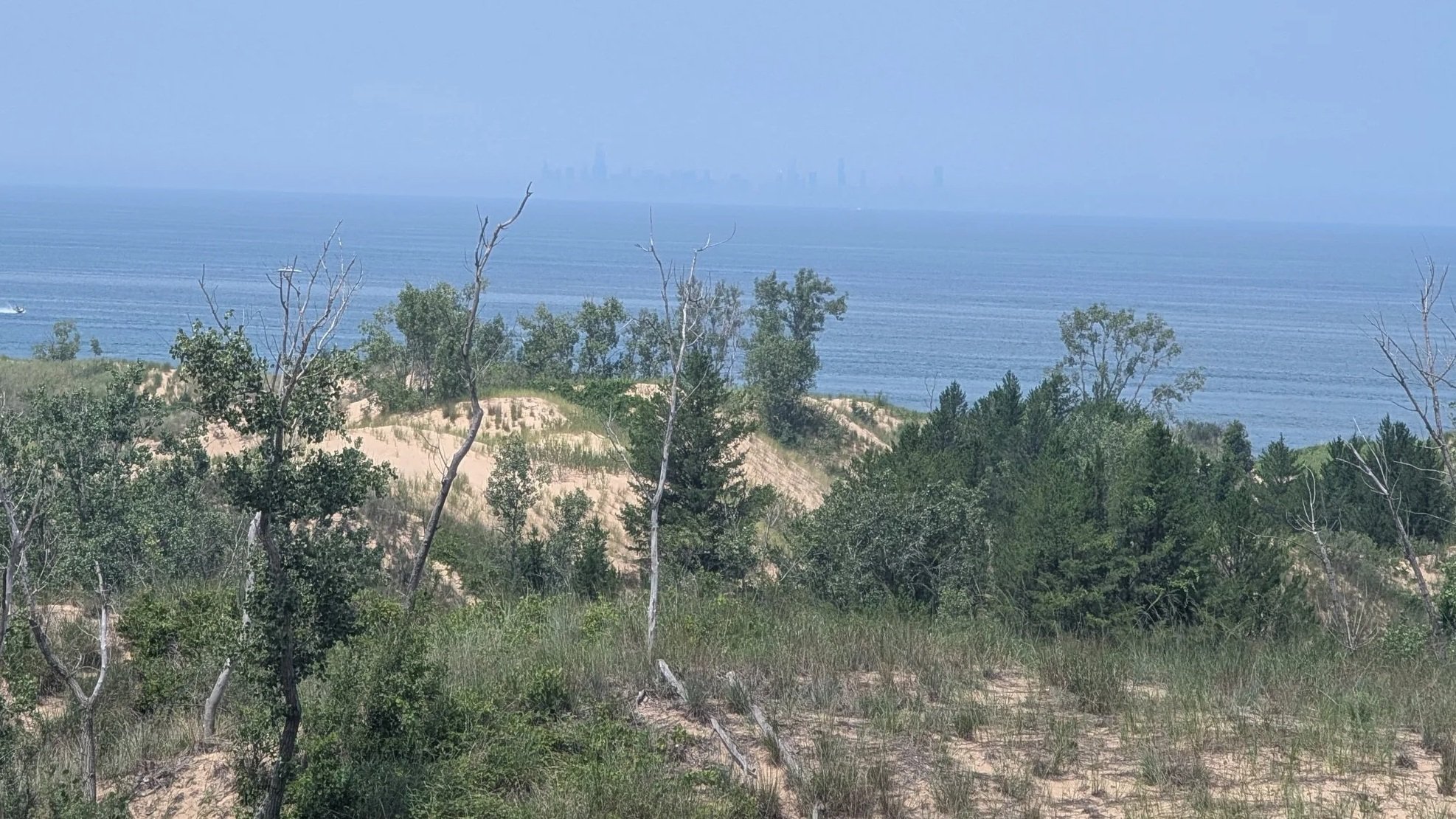
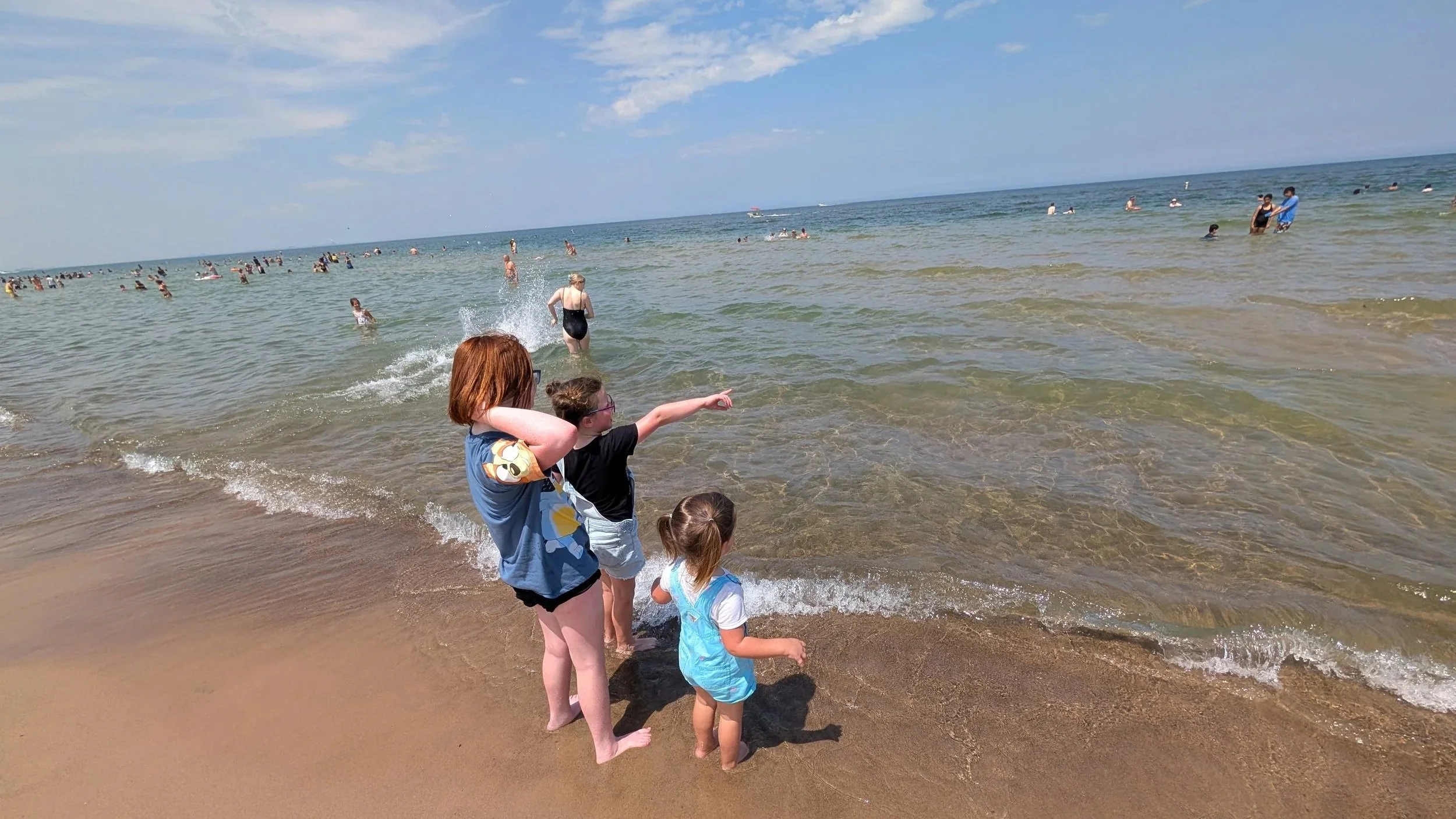
You can see the skyline of Chicago in the distance.
Pinhook Bog: A Hidden Gem
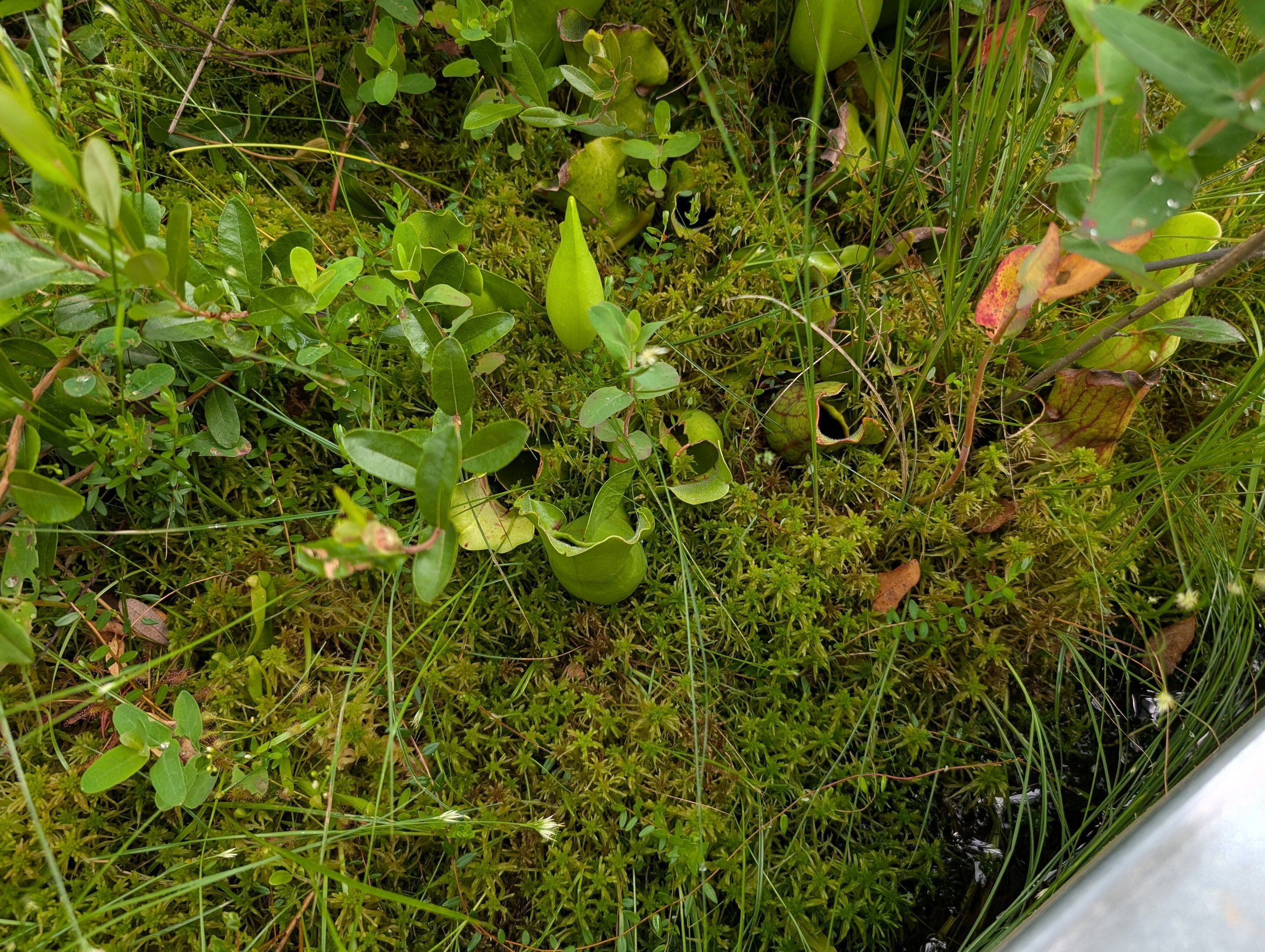
Carnivorous pitcher plants
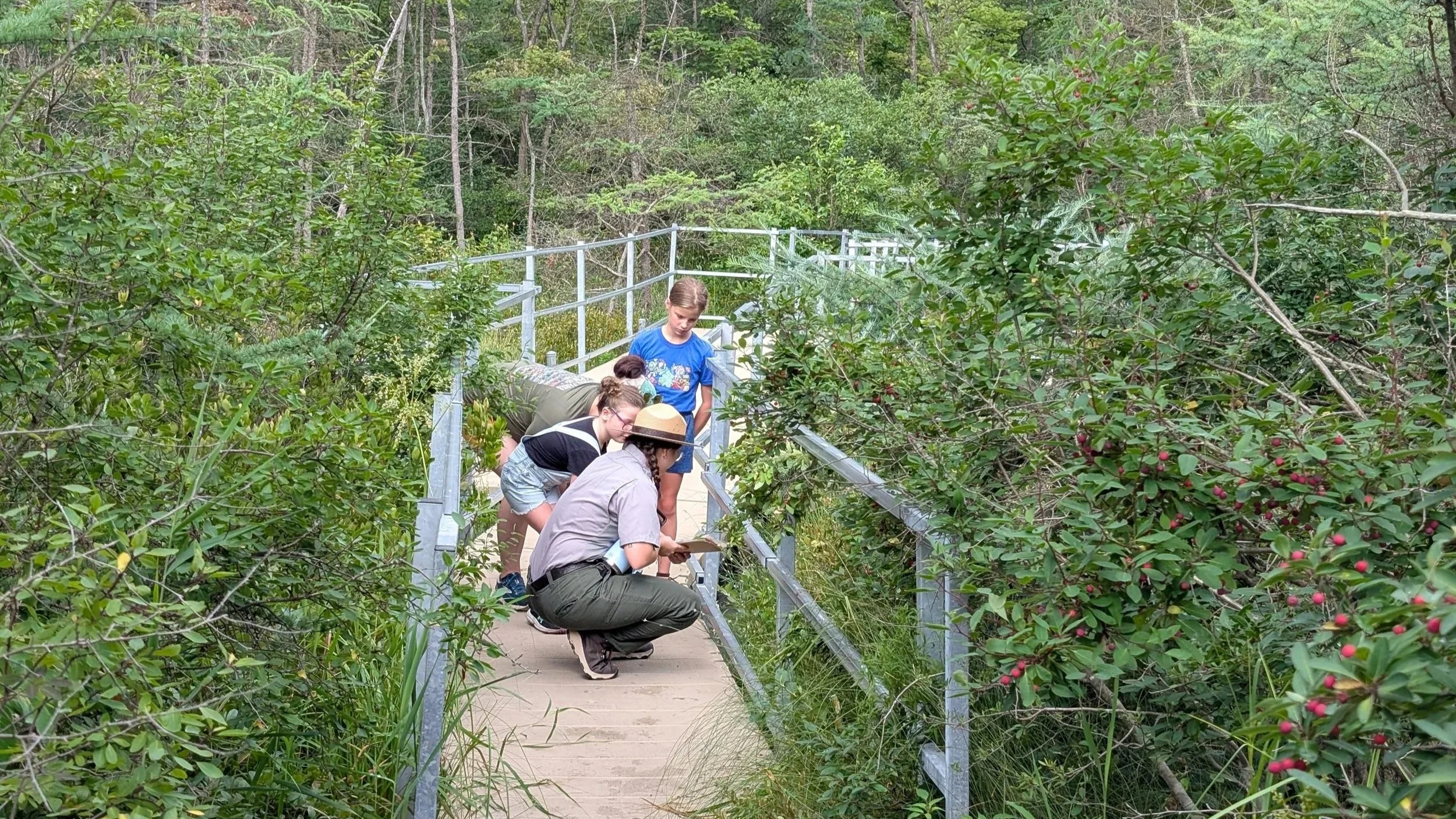
We started the day at the Pinhook Bog Open House, which is an isolated property about 20 mins east of the Dunes Visitor Center.
Pinhook Bog is only accessible on select days through ranger-led boardwalk tours, which makes visiting feel like getting a backstage pass. The bog formed around 10,000 to 15,000 years ago when a glacier carved out a depression that filled with melting glacier water. Since there is no outlet, the water is stagnant, making it highly acidic. This means the 167 species of plants that can survive are fairly rare.
There are five carnivorous plant species living in the bog. Two types of sundew (spoonleaf and round-leaved) lure insects onto their sticky leaves and slowly digest them. The purple pitcher plant fills itself with digestive fluid and drowns whatever falls in. The horned bladderwort and hidden-fruited bladderwort essentially inhale small insects into tiny bladder-shaped traps. Walking the boardwalk while a ranger points all of this out to your kids is the best!
If you're planning a visit to the Dunes, check the park calendar ahead of time and build your trip around an open houses (ie. Pinhook Bog, Mount Baldy, Chellberg Farms, etc). They are worth it.
Visitor Center and Passport Stamps
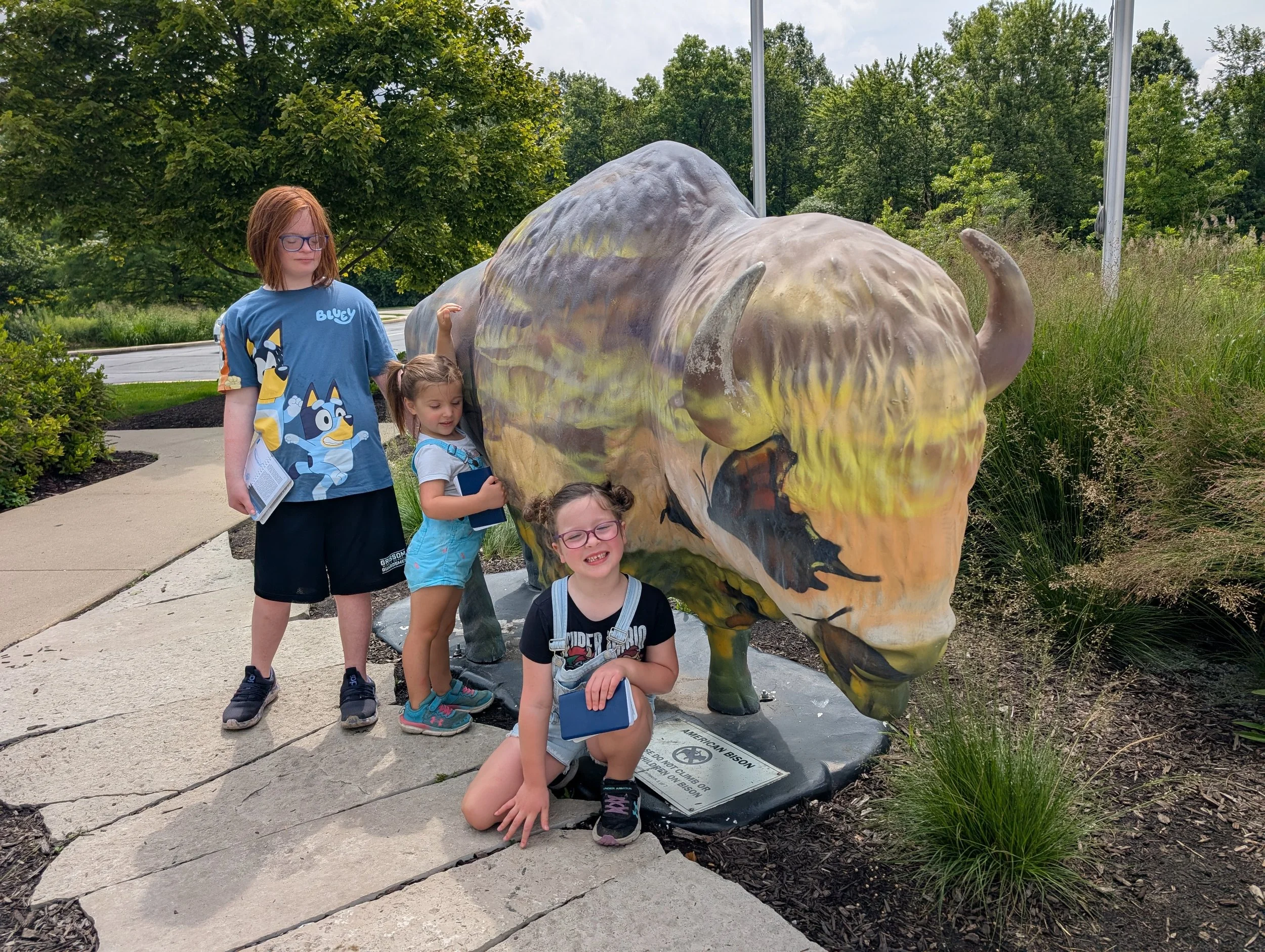
From the bog we headed to the Indiana Dunes Visitor Center to pick up Junior Ranger books and collect our passport stamps. At this point the passport collection is in full swing after the Park Passport Predicament of Olympic National Park, so all four girls had their books ready and knew exactly what they were doing.
The visitor center does a nice job explaining just how diverse this landscape is, which helps reframe the rest of the day. Worth spending a few minutes inside before heading out.
The Dunes Succession Trail
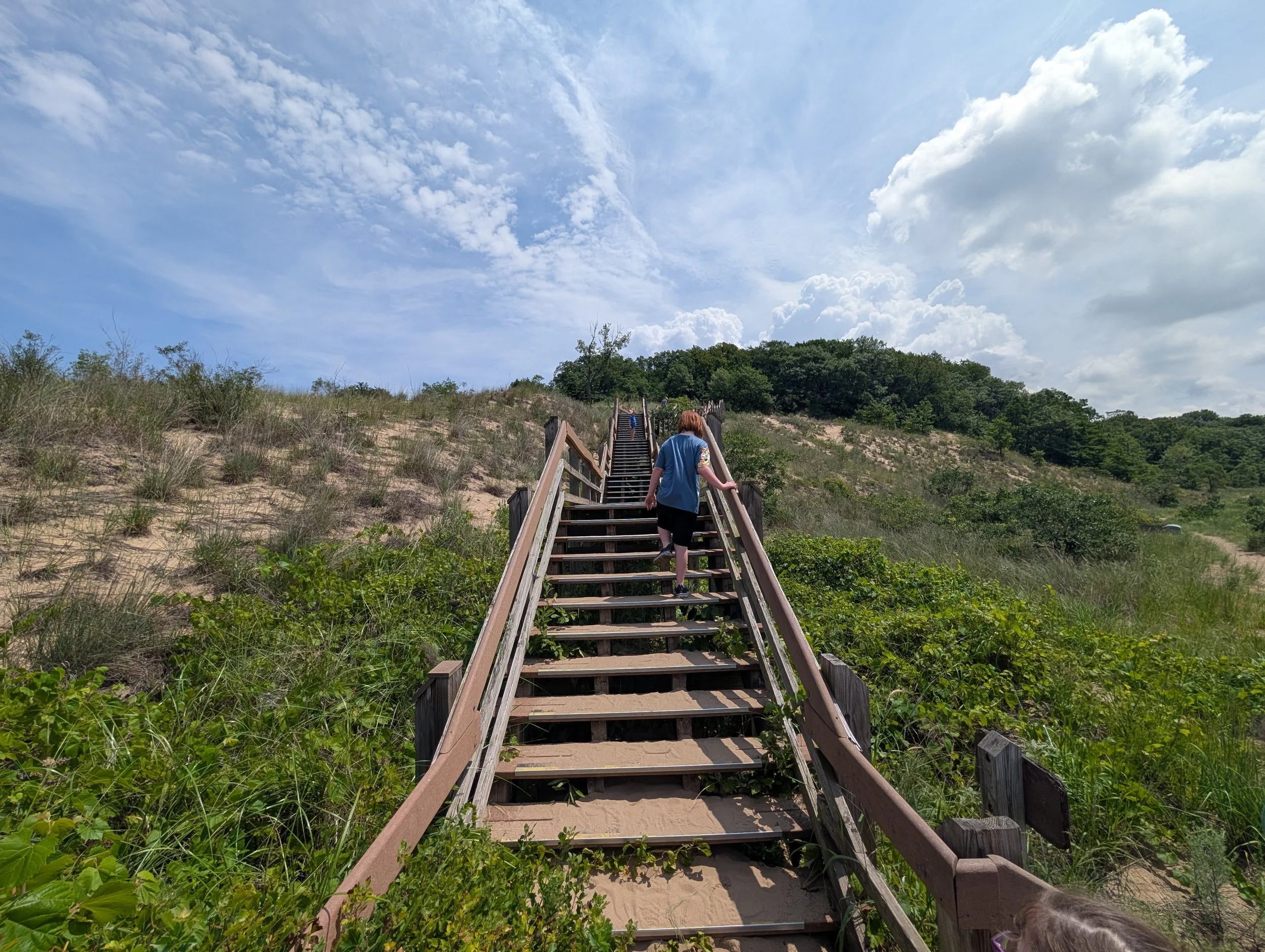
Next, we drove over to the popular West Beach to hike the Dunes Succession Trail, which is a loop trail that is just shy of a mile. It highlights the four stages of dune development. While it was a short hike, the 90-something-degree day in late July made it feel a bit strenuous.
The trail climbs through the dunes, with plenty of stairs and some real elevation gain, before opening up to impressive views of Lake Michigan and the skyline of Chicago on the horizon. Along the way, interpretive signs explain how the dunes are formed and how plant communities gradually establish themselves over time. It's the kind of trail that manages to be genuinely educational without feeling like homework.
We hiked the trail in a counterclockwise loop, which meant after about 0.7 miles, we arrived at the beach and could cool off. We also at the stopped at the Big Weiner at the West Beach Bathouse were we got…you guessed it…ICE CREAM treats. The kids loved this reward.
Chellberg Farm: A Surprise Stop
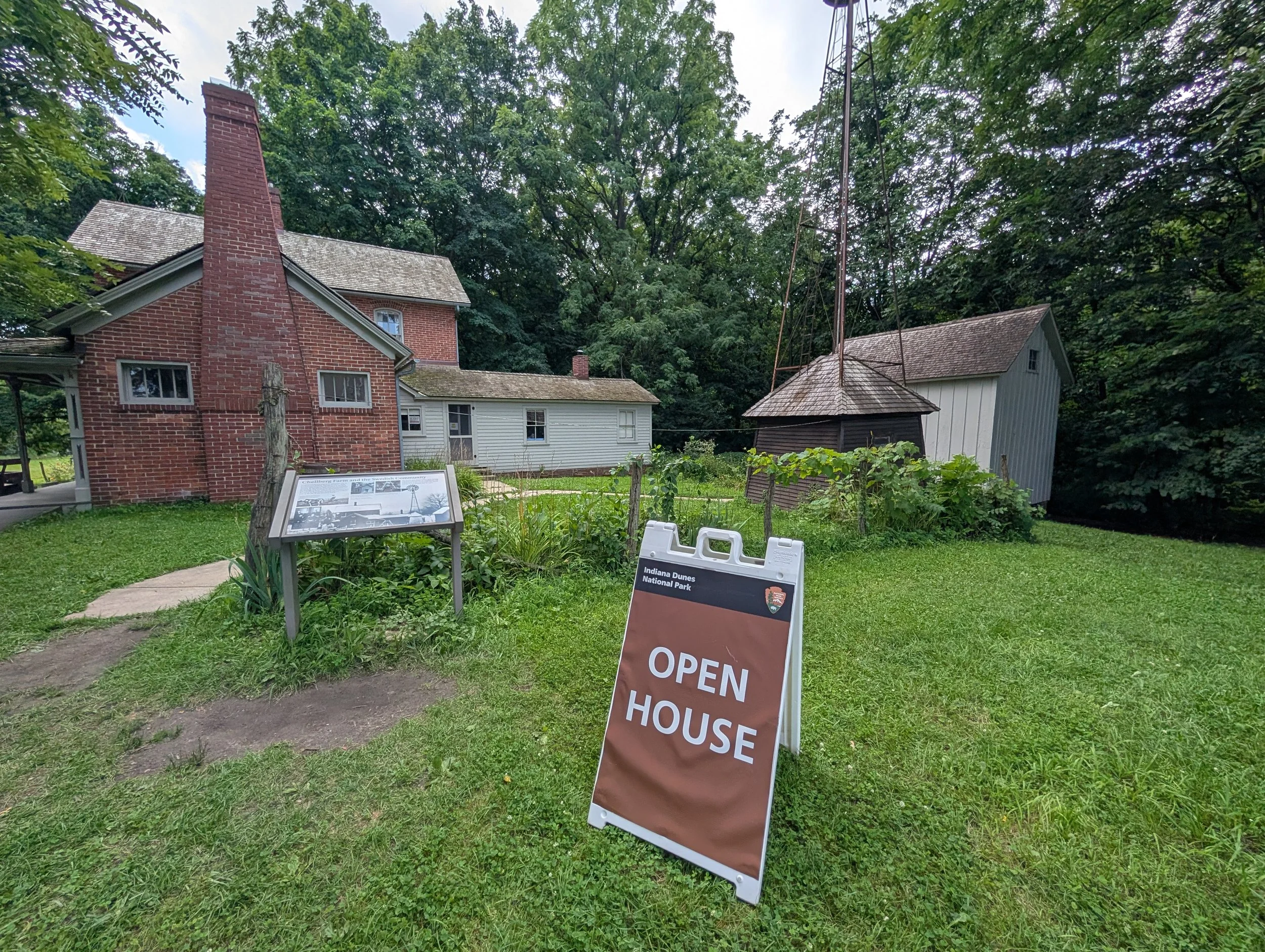
We decided to beat the heat and head to a shadier portion of the park for the Chellberg Farm Open House.
The historic farm sits inside the national park and tells the story of the Swedish immigrants who settled this area in the late 1800s. The open house lets you explore the farmhouse, barns, and grounds while learning about what daily life looked like here over a century ago. It was a nice change of pace and the girls loved seeing the chickens.
Junior Ranger Badges
Before wrapping up the park portion of the day, we returned to the visitor center and sat at some picnic tables so the girls could finish their Junior Ranger books and earn their badges.

Dinner at Lemon Tree
We finished the day at Lemon Tree in Chesterton, and if you're not from Northwest Indiana, think of it as a Chipotle-style setup but for Mediterranean food. You build your bowl with fresh ingredients and your choice of protein (ie. chicken shawarma, kabob, falafel, etc), sides (ie. tabouleh, hummus, etc) and warm pita on the side. No long wait, it’s fast without feeling like fast food. After a day of hiking dunes in the heat, it was exactly the right call.
Is Indiana Dunes Worth It?
Yes!
Indiana Dunes gets a lot of guff. It's not a thousand acres of dramatic western landscape like Yellowstone, Glacier, or Olympic. It's a small park wedged between steel mills and the suburbs of Chicago, and people treat it like a consolation prize on the national park checklist. A lot of people see it as simply a beach.
But I think this park plays an important role, maybe more important than parks twice its size. The park is home to over 1,100 native plant species, 30% of Indiana's rare, threatened, and endangered plant species, and more than 350 bird species. The biodiversity is incredible; you can find wild orchids and prickly pear cactus within a few miles of each other.
Standing at the shoreline of Lake Michigan here, you get a glimpse of what this entire coastline was before industrialization swallowed it. The dunes, the wildflowers, the ecosystems that somehow still thrive here between steel mills, the Toll Road, and Chicago. This is what was here first. Indiana Dunes isn't just a park. It's a reminder. A small, stubborn, beautiful reminder of what we almost lost, now preserved and protected right in the middle of everything that replaced it. We enjoyed our day at the Dunes and will visit again to tackle Mount Baldy (you can only go up it during an Open House) or to explore the distinct habitats along the Cowles Bog Trail.